6403 S. Uvalda St. Suite 300-D, Centennial, CO | (inside The Performance Shift) | Direct Voicemail: (303) 960-2075 | Email: info@backinsteppt.com
Back In Step Physical Therapy
  • Welcome
  • Dance Medicine Services
  • Testimonials
  • Resources
    • Dance Med Spotlight Podcast
    • Blog
    • Our Dancer’s Kit
    • eBooks
  • Contact
  • Media
  • Click to open the search input field Click to open the search input field Search
  • Menu Menu
  • Link to Facebook
  • Link to Instagram
  • Link to Youtube

Swingtime in the Rockies 2017 – West Coast Swing event

July 21, 2017

At the end of July, I had to chance to participate in another competition weekend at the Westin hotel in Westminster – Swingtime in the Rockies. The entire event is spent around my favorite style of dance to participate in these days, West Coast Swing.

Swingtime in the Rockies

First, A Little Bit About the Typical West Coast Swing Event Weekend

Workshops

The weekend included many hours of workshops, where groups of students of various levels are taught by either a professional couple or individual. It’s a chance to build upon your basic knowledge, to revisit things that you’ve heard a million times but just need it explained a little differently, or to learn new a technique or move to incorporate into your dance. One thing that is great about this event is that they offer Project Swing Workshops – free workshops geared toward new dancers. There is one scheduled every day, and can be great for people who have just recently started and want to review, or someone who has never tried but is inspired to give it a shot.

Competitions

Competitions include a variety of options, and run throughout the weekend. Some of them are a “one and done” approach, dancing with one partner for one song. Others may require up to 3 rounds of competition, making cuts after each, until the top placements are determined.
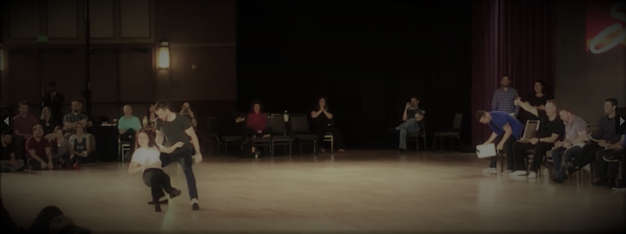
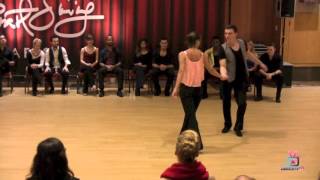
Champions Jack & Jill – Tara Trafzer & Sean McKeever

Let’s talk about the types of competition – Routine, Strictly, Jack and Jill (J&J). I’ve included links of some fun examples of each kind of competition, so please check them out!

  • Routines are what most people envision, but typically has the lowest number of competitors, compared to some of the other options. As part of doing a routine, partners are chosen in advance, costumes are made, and choreography is determined. Routines require many hours of rehearsal to perfect everything, even down to when you turn your head or point a finger.
    • Routines can be a part of 3 basic divisions – Rising Star, Classic, and Showcase.
      • Rising Star – this is an amateur division. Rules can vary a little bit from event to event, but it’s a great way for competitors to start early, and gain a different kind of competition experience.
      • Classic – this division demonstrates some of the more typical, but advanced, aspects of swing dancing.
      • Showcase – building upon the idea of the classic division, dancers are allowed to do lifts and aerial tricks as part of their routines.
  • A “Strictly” involves partners who have chosen one another ahead of time, but don’t know the music that they’re going to be dancing to.
  • The “Jack & Jill” or “J&J” is what I consider to be the most fun! You don’t know your music, much like the Strictly, but you also don’t know your partner. You may never have even met before!

Now that you know more about the types of competition, let’s talk about some other options.

You can dance within your own level – for example, I am currently an Intermediate level dancer, and I would dance with another Intermediate dancer. You can dance in an Open, meaning that you can dance with a partner of any level. Finally, you can do something called a Pro-Am. This is when an amateur dancer, like myself, dances with a Professional. Competitions can be made up of just about any combination of the types and levels mentioned above, which also provides plenty of opportunities to compete.

Social Dancing

When you see “social dancing” on the schedule, it means that a DJ plays music for people to dance to as they want. People will go up to another person, whether they know them or not, and ask them to dance. The first night of social dancing is often one of the more quiet nights, but can also be fun because you have more space to play! Saturday night tends to be the most popular night for dancing, and Sunday night is for those who just can’t seem to get enough from the rest of the weekend.


Social Dancing on Friday night

Social dancing may last throughout the night, sometimes going until 6am or later. I’ve often heard, and experienced, that some of the best dancing happens between 1am and 4am. It becomes a decision of sleep vs dance, and, let me tell you – a lot of people choose dance!

More About Swingtime in the Rockies

I wasn’t able to attend the event kick-off Thursday night, July 21st, which started with a workshop by Kyle Redd and Sarah Van Drake, professionals out of California, but I heard that it was a great class (as usual!). Their class was then followed by an evening of social dancing.

Friday started with a few hours of workshops, and then competitions started in the evening. Things began with Pro-Am Jack & Jills, followed by a majority of the Strictly divisions. Competitions wrapped up with Champion Strictly, where we get to watch some of the best of the best at the event, and the creativity runs wild. After competitions were done for the day, social dancing continued throughout the night.

Saturday again started with workshops. Competitions started with the early rounds of Jack & Jills for each level/division. After the dinner break, we started back with Exhibition performances, including Dancing with Friends. After the Exhibitions, the routine division began – Rising Star, Showcase, and Classic. Before social dancing began for the night, we also had some “fun” competitions, the Jill & Jack Open (role reversal) and the Glow Jack & Jill, which truly are just for fun. And what fun they were!

Dancing with Friends

 Sunday was the final day of the event. Of course, there were workshops again in the morning. The last of the Pro-Am competitions were next, including Pro-Am Strictly and Pro-Am Routines. Next up – the final rounds of all of the Jack & Jill divisions, including Champions. These dancers had survived the last cuts, and were dancing for final placements, which could result in trophies, money earnings, point distributions to help move up in the levels, and, at the very least, bragging rights! Dancers then had a chance to get their last hours of social dancing in.

Back in Step PT and Swingtime

I was able to go to this event this year not only as a competitor, but also to represent Back in Step Physical Therapy. We offered a variety of services for dancers, including kinesiotaping, trigger point dry needling, and other preventive and rehabilitative physical therapy services.

Intermediate Jack & Jill – Alyssa Arms & Joe McEndree

It’s important to have options for dancers, who are artistic athletes, to have prompt and reliable care for both new and old injuries, but also to find assistance and guidance in injury prevention. Our goal at Back in Step PT is to offer these opportunities, whether it is on location at dance events or providing services at our clinic in Centennial, CO.  So often, dancers forget that we are also athletes – regardless of what level we dance at, if we compete, what style we do, or our motivations of dancing. We easily brush off a tweak of the shoulder, a catch in the neck, or foot pain, to name a few, as a by-product of our hobby, when, in fact, there is something that we could do about it. Or maybe it can even be prevented in the first place.

Learn more about physical therapy and dance in another one of our blogs, Calling All Dancers. That’s where Back in Step Physical Therapy steps in.

If you would like to know more about the services that we offer please see our services page. If would like to have us come to your event, provide a class or workshop, etc., please contact us here.

Also check our our Dancer’s Kit!

Dance: Its Own Language

July 21, 2017

For anyone who has taken dance classes or watched a dance performance, you know that dance has it’s own language. It’s an amazing thing to see, and even more amazing to experience.

I came across a video from Jubilee, called “Between Words” while perusing through Facebook one day, and it became the inspiration for this blog post. This video is a great depiction of dance being its own language. Two people from different countries, that speak two completely unrelated languages were able to come together and create a beautiful dance. *Link not shared here due to mature language in the music/lyrics used*

I can’t tell you how many times I’ve seen other examples. Maybe it’s a video from YouTube that has a guest instructor from another country, who is still somehow able to teach a room full of students in the host country an entire routine with minimal discussion in a common spoken language. Even without speaking, and without planning, beautiful, emotional dances can be created.

Here’s an example from the style of dance that I currently compete in, West Coast Swing. This is an event that took place in Budapest, and the dancers are French (Emeline Rochefeuille) and Russian (Semion Ovsiannikov). The dance is completely improvised, just dancing with one another according to what they feel in the connection between the lead and follow, and the connection that they feel with the music. https://www.youtube.com/watch?v=B3semnFDoTY

Or, one of my personal favorites – a waltz performance by Susan Kirklin and Gary McIntyre, a professional couple out of Texas. The song has no words or lyrics, but the performance creates an entire story, full of comedy and tragedy, ultimately resulting in compassion and friendship. https://www.youtube.com/watch?v=AfE_RPS_HKw

No matter the style, no matter the match-up of dancers, dance is able to transcend any and all languages. Particularly if done well, you can’t help but to feel *something* when watching. Even as the dancer yourself, you can sometimes feel as this happens. You get lost in the moment, or even overcome with emotion. If you’re already a dancer, you know what I’m talking about, and, hopefully, reading this post and watching these videos has made you smile – remembering when you’ve had these experiences yourself. And if you’re not a dancer yet, maybe it has inspired you to go out and take a dance class somewhere. Or, at the very least, maybe you’ll watch a dance show on television or buy a ticket to a performance.

Go out and share the language of dance!

Also check our our Dancer’s Kit!

The Educator’s Experience – Part 2: Working with Students

July 14, 2017

In The Educator’s Experience – Part 1: Patient Education, I talked a little bit about my long-time love of teaching. I also explained more about why I think that patient education is such a critical part of the physical therapy experience. This blog post, Part 2, will discuss the role of physical therapist as a mentor, educator, and guide for the future generations of physical therapists.

Even before I applied for physical therapy school, I’d learned that each school has requirements for observation hours in a variety of physical therapy settings. I was able to spend time with several therapists in very different types of clinics, treating very different types of patients. During this time, I wasn’t really able to participate, but was a fly on the wall, absorbing everything that I was observing. This was the time that I was confirming that this was the profession that I was falling in love with, and that it was, in fact, the path that I was meant to follow.

As a student in a Doctor of Physical Therapy (DPT) program, the role of other physical therapists was crucial. Not only were they the majority of our faculty in the program, but also acted in a role, much like I do now, as a Lab Assistant or Clinical Instructor. Each class that involved learning hands-on skills provided several assistants per room to wander around, giving feedback, and answering questions. They also helped during testing time for those same courses, grading us on our interactions and skills, while our classmates acted as our mock patients. It was invaluable to get individualized feedback from these professionals, and we had a chance to learn more about the various facets of the profession, based on each assistant’s own professional path and experience.

Clinical rotations were another opportunity to interact with other PTs. When I was in the program, we had nearly a year’s worth of time in the clinic, under the supervision of licensed therapists. This was a chance to work with real patients this time, alongside a PT. We would learn exercises, refine our hands-on skills, and work on clinical reasoning. The PTs that I worked with during my clinical rotations were the true bedrock of my own development as a therapist, and I couldn’t be more grateful for the gifts of education and experience that they each provided to me. Even now, working with my peers as mentors and sounding boards, is an important part of my continued progression as a professional.

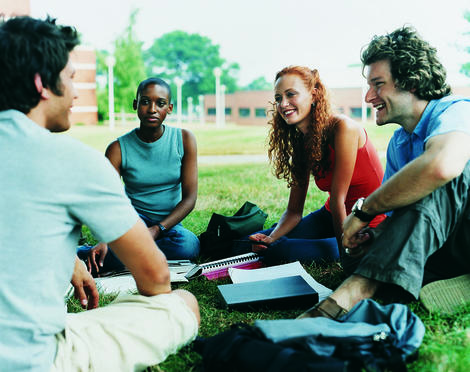
students

My past experiences as a student have helped me realize that I now have the opportunity to provide the same kinds of experiences for current students. These students are the future of the physical therapy profession, the future healthcare providers for my friends and family, and my future colleagues and peers. I feel that it is my duty to give back, and I’ve found that I receive so much in return.

As soon as I was able as a new grad PT, I started taking students of all kinds. It started with observation students, the ones who are deciding whether or not a career in physical therapy is truly what they want. It quickly turned into taking students from DPT programs. It was always interesting to watch the students interact with patients, and watch their skills grow. I also loved to set aside time to work one-on-one with my students, practicing some of their techniques, giving them feedback, and discussing cases.

When I was no longer working in positions that would allow me to have a student working with me in the clinic, I took on my role with working at the DPT Program. As described earlier in this post, I work primarily with students in their first year of the program, and get to help them form their basic skills and the beginnings of their clinical reasoning. Working with students gives me the opportunity to stay very up-to-date with the information and evidence, and continue to think at much more specific level, due to the students’ questions and learning processes. I feel like it makes me a stronger clinician because of it. And, of course, I feel so proud when I see the lightbulbs go off, and it makes me excited to think about my students as future colleagues.

All in all, I feel fortunate to be able to be an educator – of all kinds. It’s great to get to work with my patients, like I talked about in Part 1, to enhance their experience during physical therapy sessions. And working with students, both in the clinic and in the classroom, never ceases to be an eye-opening experience that I also gives me so much in return.

Thank you to all of my past teachers, professors, clinical instructors, patients and students, for being the source of inspiration for what I do every day, and for continually shaping me into the therapist and educator that I am today.


Article author, Alyssa Arms, PT, DPT, OCS holds a Doctor of Physical Therapy (DPT) degree from the University of Colorado Anschutz Medical Campus, and later obtained a Board Certification as an Orthopedic Clinical Specialist (OCS). She is also the President and Owner of Back in Step Physical Therapy in Centennial, Colorado, and is an instructor at her PT alma mater.

Body Shaping: How Our Habits, Environment, and Culture Influence Us

July 3, 2017

While assisting in a class at a nearby Doctor of Physical Therapy program this morning, I was reminded of this fascinating article and NPR broadcast. The article talks about differences observed between our modernized civilization and some indigenous populations. For example, they found a group in rural India that almost never has complaints of back pain. Upon further exploration, they even found that their spines and inter-vertebral discs show less wear and tear. But why would this happen?

Let’s consider a few things.

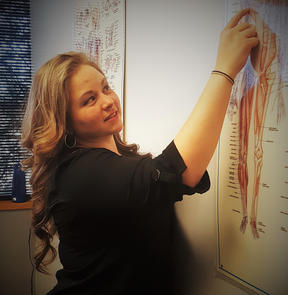
Image: Visible Body Muscle Premium 

A few weeks ago, Back in Step Physical Therapy shared another blog post, Tech(nology) Neck. We discussed how some of our regular, every-day activities, like using our smartphones and tablets, or working at our desk or on our laptops, can start to influence how our body is shaped, and, more importantly, how it functions. Our technology-centric population continues to see a rise in back and neck pain, thumb/wrist/elbow pain, and other complaints that can be related to our postures and activities.

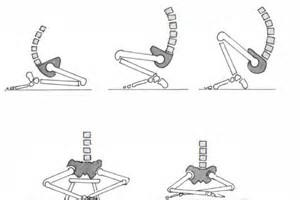
We also seem to be spending more and more time sitting. Sitting during the commute to and from work or school, sitting at a desk, sitting to watch television as we relax for the evening. So imagine that our body, which is designed to have us upright, much like the spine images above, is now being asked to function in a different, seated position. It’s not a stretch to believe that this leads to a change in stresses and demands on our bodies.

Technology use

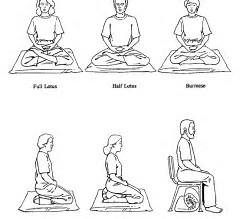
Let’s now imagine even another scenario, not related to the technology that we interact with, but cultural differences. In our Western culture, we tend to sit in chairs, on stools, or on sofas. In some Eastern cultures, kneeling, squatting, or sitting cross-legged are more of the norm. Look at the pictures below to get a sense of how each of these positions could make our bodies work. Thinking about it further, how much time you spend sitting in a chair? Now imagine spending that same amount of time in one of these other positions. If you’re not used to these positions, odds are good that it would be quite uncomfortable, but, if it’s a normal position, you may use it when you’re waiting for the bus, eating, or chatting with friends.

Whether it’s our sitting position, the technology that we interact with, or the activities that we do, we are constantly influencing how our bodies move and function. It’s important that we learn more about our bodies, and ensure that they continue to operate as optimally as possible.  If you want to focus on injury prevention or injury rehabilitation, or just want to learn more, please contact Back in Step Physical Therapy. We not only offer physical therapy services, but also offer wellness services, annual physical therapy assessments, and educational seminars.

Archive

  • March 2026
  • January 2026
  • December 2025
  • November 2025
  • October 2025
  • September 2025
  • July 2025
  • June 2025
  • May 2025
  • April 2025
  • March 2025
  • February 2025
  • January 2025
  • December 2024
  • November 2024
  • October 2024
  • September 2024
  • August 2024
  • July 2024
  • June 2024
  • May 2024
  • April 2024
  • March 2024
  • February 2024
  • January 2024
  • December 2023
  • November 2023
  • October 2023
  • September 2023
  • August 2023
  • July 2023
  • June 2023
  • May 2023
  • January 2023
  • December 2022
  • June 2021
  • May 2021
  • March 2021
  • December 2020
  • September 2020
  • December 2019
  • November 2019
  • June 2019
  • May 2019
  • October 2018
  • April 2018
  • January 2018
  • December 2017
  • November 2017
  • September 2017
  • July 2017
  • June 2017
  • May 2017
  • April 2017
  • January 2017
  • October 2016

Back In Step Physical Therapy

Now partnering with The Performance Shift!

(303) 960-2075
info@backinsteppt.com

Check out our YouTube channel!

https://www.youtube.com/watch?v=d1jhdHKq8Qc

Recent Blogs

  • Kristen Schuyten – The Performing Arts PT
  • Dance Med Spotlight: Top Episodes of 2025 & All-Time Favorites
  • Rosa Pasculli & Emma Faulkner – Dance/USA
  • Ann Hunt – Colorado Dance Education Organization (CoDEO)
  • Cara Dixon – Relative Motion Dance
© Copyright 2017-2025, Back In Step Physical Therapy. All Rights Reserved.
  • Link to Facebook
  • Link to Instagram
  • Link to Youtube
Scroll to top Scroll to top Scroll to top